

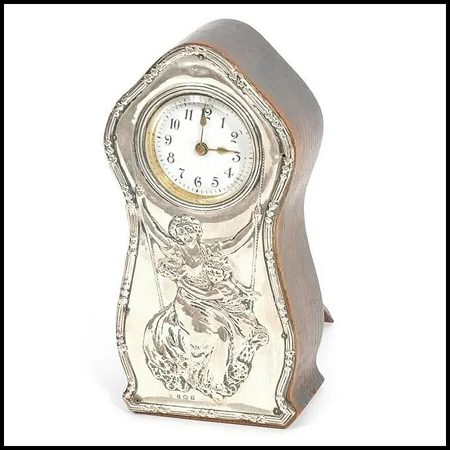
There is something quietly confident about table clocks. They never demanded the wall, never elbowed their way onto the mantel, and never asked for center stage. Instead, they waited. On desks. On side tables. On library shelves. Always close at hand, always doing their job, and doing it with a sense of dignity that feels increasingly rare.
Unlike their taller cousins, table clocks were designed for intimacy. They sat where conversations happened, where letters were written, where decisions were made. You did not glance at them from across the room. You engaged with them. You heard them breathe. You learned their habits.
That closeness is part of the charm, and it explains why collectors continue to gravitate toward table clocks even as trends come and go.
WHY TABLE CLOCKS NEVER REALLY LEFT
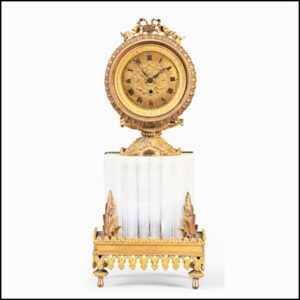
Every generation seems to rediscover table clocks as if they were a new idea. Minimalists love their compact footprint. Traditionalists admire their mechanical honesty. Designers appreciate how easily they anchor a room without shouting.
Historically, table clocks filled a practical gap. They were portable before portability was fashionable. They could move from parlor to study, from townhouse to country home, without ceremony. And because they were meant to be seen up close, makers lavished attention on details others might miss.
That is where the allure of a vintage antique clock begins. Subtle dial aging. Hands shaped by hand, not committee. Cases that feel more furniture than accessory. Once you notice those qualities, modern reproductions struggle to compete.
THE DESIGN LANGUAGE OF TABLE CLOCKS
One of the reasons table clocks remain so appealing is their diversity. Unlike wall clocks, which often follow strict proportions, table clocks allowed makers more freedom. Rounded cases, architectural columns, glazed panels, or restrained wooden boxes that feel almost monastic.
A true vintage antique clock often reveals its era immediately. The restraint of the late 18th century. The decorative confidence of the Victorian period. The clean lines that hinted at modernism. Each one is a time capsule, and serious collectors know that well-preserved vintage antique clocks tell stories without needing explanation.
Importantly, table clocks rarely feel out of place. Put one on a modern console and it becomes contrast. Place one in a traditional study and it becomes continuity. That flexibility is not accidental. It is design intelligence, refined over centuries.
MECHANICS YOU CAN FEEL WITH TABLE CLOCKS
There is a reason collectors lean toward table clocks when they want to experience horology rather than simply observe it. These clocks invite interaction. Winding becomes ritual. Listening becomes habit. Ownership becomes participation.
A well-maintained vintage antique clock does not just keep time. It marks moments. Morning coffee. Late-night reading. Quiet afternoons when the only sound is the soft punctuation of the escapement. That experience is precisely why vintage antique clocks continue to outperform trend-driven décor in long-term appeal.
And yes, table clocks were often built better because they had to be. Positioned close to the owner, flaws could not hide. Makers knew this. Quality was not optional.
TABLE CLOCKS: COLLECTING WITH CONFIDENCE
Buying table clocks today is both easier and harder than ever. Easier because access is global. Harder because quality varies wildly. The key is patience and discernment.
Look for honest wear, not artificial distress. Seek original components when possible. A legitimate vintage antique clock will not try too hard to impress you. It will simply feel right. Experienced collectors will tell you that intuition matters almost as much as condition.
The market for vintage antique clocks has matured. Buyers are smarter. Sellers are more transparent. And truly exceptional table clocks rarely stay available for long. When one speaks to you, hesitation often leads to regret.
THE TABLE CLOCK STILL MATTER
In a world dominated by screens and disposable objects, table clocks offer resistance. They are not optimized for speed. They do not update themselves. They ask something of you, and in return, they give presence.
A thoughtfully chosen vintage antique clock becomes part of daily life. Not background noise. Not decoration. But companion. That is why table clocks continue to earn their place in serious collections and well-lived homes.
They may be small, but they are not minor.
