
Why Collectors Still Chase Mechanical Time
There is something quietly mesmerizing about an old mechanical clock. Long before quartz movements and digital displays, clocks were miniature engineering marvels built by craftsmen who treated timekeeping as both science and art. Today collectors, decorators, and historians all ask the same question: what determines antique clocks value?
The answer rarely comes down to just age. Condition, maker reputation, rarity, mechanical integrity, and even regional demand all influence antique clocks value in today’s market. A modest nineteenth-century clock might sell for under $100, while a rare signed example can reach several thousand.
Understanding antique clocks value begins with recognizing what collectors actually look for when evaluating a piece.
The Factors That Determine Value
When dealers evaluate a clock, several core elements shape antique clocks value.
Maker and origin.
Clocks from respected American and European manufacturers generally command stronger prices. Collectors often research well-known makers before buying because reputation still plays a major role in determining antique clocks value. Companies such as Seth Thomas, Ansonia, Gilbert, Junghans, and Gustav Becker built movements that remain desirable in today’s market. Readers interested in the craftsmen behind these timepieces can explore our article on Top 7 Great American Mantel Clock Makers, which examines manufacturers that continue to influence antique clock sales.
Condition and originality.
Collectors strongly prefer clocks with original cases, dials, and movements. Replacement parts, refinished cases, or modernized mechanisms can reduce antique clocks value, sometimes significantly.
Working mechanical movement.
A functioning movement almost always improves antique clocks value. Even collectors who enjoy restoration typically pay more for clocks that remain mechanically intact.
Case design and craftsmanship.
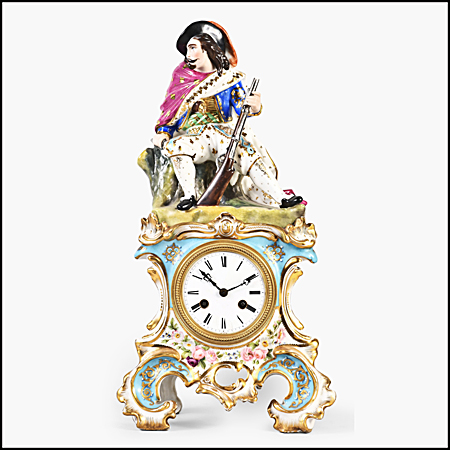
The case itself often determines a large portion of antique clocks value. Elaborate carving, porcelain panels, ormolu mounts, or marble cases frequently elevate value far beyond the movement alone.
Together these elements create the foundation professionals use to evaluate antique clocks value in auctions, galleries, and estate markets.
Market Trends in Antique Clock Sales
The market for mechanical timepieces has evolved significantly in recent decades. Today’s collectors tend to favor pieces that combine historical charm with decorative presence.
This trend has reshaped many antique clock sales across both auction houses and private dealers. Buyers increasingly look for clocks that function not only as timekeepers but also as distinctive decorative objects.
Smaller clocks in particular have seen renewed demand, especially among younger collectors entering the field through online antique clock sales platforms and specialty dealers.
At the same time, rare or museum-quality examples continue to anchor the high end of antique clock sales, where maker signatures, originality, and condition drive serious bidding.
These shifts constantly influence antique clocks value, sometimes elevating categories that were once overlooked.
Why Antique Mantel Clocks Remain Popular
Few clock forms capture the character of nineteenth-century timekeeping like the antique mantel clock.
Originally designed to sit prominently on a fireplace mantel, these clocks became central decorative objects in Victorian and Edwardian homes. Their compact size and decorative cases made them accessible alternatives to large floor clocks.
Collectors today appreciate the antique mantel clock for several reasons.
First, many models display remarkable craftsmanship in a relatively small format. Marble, slate, brass, porcelain, and carved wood cases often surround finely engineered mechanical movements.
Second, the antique mantel clock remains one of the easiest entry points for new collectors. Compared with large floor clocks, mantel clocks require less space while still offering authentic mechanical timekeeping.
Finally, many examples survive in excellent condition, which helps stabilize antique clocks value in this category. Because of this balance of craftsmanship and accessibility, the antique mantel clock continues to appear frequently in estate inventories and dealer offerings.
Typical Collector Price Ranges
Collectors often ask what real-world antique clocks value looks like across common categories. While maker, rarity, and condition always matter, typical market ranges provide useful guidance.
• Early American shelf clocks: $100 – $800
• Marble or slate antique mantel clock examples: $150 – $900
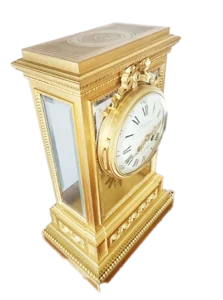
• French gilt bronze mantel clocks: $800 – $3,500+
• Vienna regulators and wall clocks: $500 – $2,000
• Rare signed examples appearing in major antique clock sales: $3,000 – $15,000+
These ranges illustrate how dramatically antique clocks value can vary depending on maker reputation, originality, and historical demand.
The Role of Age vs. Rarity
One of the most persistent myths in collecting is that age alone determines antique clocks value.
In reality, rarity and desirability often matter more than age. A common early-1900s clock may be worth less than a rarer nineteenth-century example simply because thousands were produced.
Collectors evaluating antique clocks frequently look for limited production runs, distinctive case styles, or unusual features such as calendar mechanisms or musical chimes.
These characteristics introduce scarcity, which can significantly influence antique clocks value.
How Collectors Research Value Today
Modern collectors have more tools than ever to study antique clocks value.
Auction archives, dealer inventories, and online research platforms allow buyers to compare past antique clock sales and identify realistic price ranges. This transparency has made the market more informed while helping collectors avoid unrealistic asking prices.
Serious enthusiasts also study historical catalogs and maker histories to understand which models appear most frequently in antique clock sales and which remain scarce.
Over time, these comparisons create a clearer picture of true antique clocks value in the current collector market.
A Note From Long-Time Dealers
Anyone who has spent decades around antique clocks quickly learns that no two pieces are identical. Subtle details in the movement, dial signature, or case construction often reveal why collectors place different levels of antique clocks value on seemingly similar clocks.
Experienced dealers watch patterns in antique clock sales, noting which makers remain stable, which designs gain popularity, and which rare models quietly disappear into private collections.
Over time those observations help explain why the true antique clocks value of a piece becomes clearer only when viewed within the broader collector market.
Why Mechanical Clocks Still Matter
Beyond their monetary worth, mechanical clocks continue to fascinate collectors because they represent a vanished era of precision craftsmanship.
Each gear, pivot, and escapement was built to measure time using nothing but physics and careful engineering. When collectors wind a clock and hear its steady rhythm, they experience the same mechanical ingenuity that guided households more than a century ago.
That connection between artistry and engineering ultimately sustains antique clocks value today.
Collectors are not simply buying timepieces. They are preserving small monuments to craftsmanship, history, and human ingenuity.
