
There was a time when telling the hour wasn’t just about function — it was about art. You didn’t simply glance at your phone; you listened to the heartbeat of time through brass gears and glass domes. Those who collect rare antique clocks today know exactly what that means. Each one of the rare antique clocks holds not just age, but the fingerprint of the craftsman who built it — a story in metal, wood, and patience.
Rare Antique Clocks Were Milestones In Engineering
These rare antique clocks stand at the crossroads of engineering and elegance. Built before automation dulled the touch of human hands, these rare antique clocks reflect an age when a rare clock wasn’t just a possession, but a status symbol. The weight of a pendulum or the sound of a chime could say as much about a person’s taste as their home itself. It’s what makes finding one of these treasures such a moment of quiet awe for collectors and restorers alike.
Rare Antique Clocks Are A Piece Of History
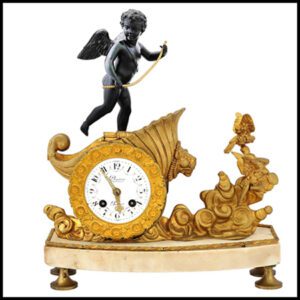
Many who start with an old clock on a mantel don’t realize they’ve opened a door to a world of history of rare antique clocks. Behind that ticking face lies the signature of a long-forgotten artisan — a Parisian workshop, perhaps, or a small English maker known only to a few. The details matter: the curve of a case, the shape of a keyhole, the rhythm of the escapement. Each clue tells whether these rare antique clocks are just old, or truly one of the rare antique clocks sought after by connoisseurs.
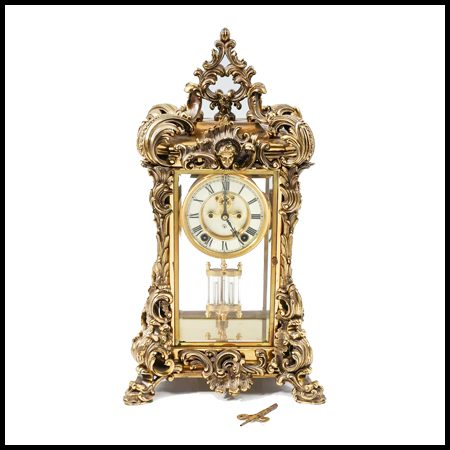
Collectors often speak about these rare antique clocks in reverence. The finest rare antique clocks weren’t mass-produced; they were born in the mind of a designer who understood proportion, harmony, and restraint. Even the simplest design hides complexity. You might lift the glass dome of an old clock and see a miniature world of polished brass wheels and ruby pivots — the result of hours upon hours of work. It’s not just machinery; it’s art disguised as precision.
Old Clocks That Are Rare Can Be Found In Attics
Of course, not every piece is destined to live behind glass. Many rare clocks are found forgotten in attics, their mechanisms seized and their faces worn by time. Yet, with skilled restoration, they awaken again — and with them, the sound of a bygone world. For those who know the market, these revived treasures often become valuable antique clocks, commanding admiration and high appraisal alike. What matters most, though, is not the price tag, but the connection to craftsmanship that can no longer be replicated.
With Old Clocks Provenance Is All
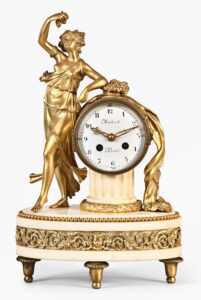
In restoration circles, rare antique clocks are treated like old manuscripts — approached with reverence and gentle hands. The restorer’s task isn’t to make it new, but to make it live again. To polish too much is to erase history; to neglect it is to let history fade. That balance is what separates a true collector from a casual buyer of valuable antique clocks. It’s also what keeps the field of horology vibrant — a bridge between the mechanical genius of the past and the curiosity of today.
As with all rare antique clocks, provenance is everything. Knowing where and when it was made transforms it from a pretty object into a chapter of human history. Was it crafted in the golden age of French artistry? Or perhaps it’s a restrained piece from early Victorian England? Even an old clock without famous origins can hold deep worth if it carries authentic marks of its time. What drives collectors isn’t the quantity — it’s the story of the rare antique clocks.
To Collect Rare Clocks, You Need Not Be A Horologist
There’s a quiet respect that surrounds these pieces, one that even casual observers can feel. You don’t have to be a horologist to appreciate the allure of rare antique clocks — only someone who understands that beauty can exist in function. Whether it’s the steady tick of a restored rare clock or the solemn charm of a valuable antique clock passed through generations, each has a voice that speaks softly through the years.
In the end, these rare antique clocks remind us that time isn’t just measured — it’s made. Every tick, every chime, every carefully turned gear whispers of an era when patience and pride went into every second. And that’s something no digital display can ever replace.
